Kevin Clarke was born in New York City in 1953. In 1976, he completed studies in sculpture at Cooper Union in New York with Hans Haacke and Christopher Wilmarth. He then spent four years in Switzerland and Germany working on conceptual photographic projects and exhibitions.
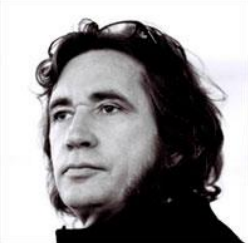
During Documenta 6 in 1977, he was an assistant to Joseph Beuys at the Free University, which he directed. In 1980, Kevin Clarke published the illustrated book “Kaufhauswelt,” for which he won the prestigious Kodak Book Award. This was followed in 1984 by “The Red Couch. A Portrait of America.” With this project, in which Clarke portrayed well-known and unknown Americans on a red couch, he achieved worldwide fame. The photo series was exhibited and published many times, and was cited as a motif in advertising and the media.
In the late 1980s, Kevin Clarke came into contact with Applied Biosystems in California, who were working on the scientific development of the human genome analysis process. Clarke asked the geneticists to develop a non-comparative, individual-specific sequencing process, and they used Clarke’s blood for these experiments. So the first findings in terms of individualized sequencing results were based on Kevin Clarke’s blood samples and were published in the Journal of Clinical Chemistry in 1989. Inspired by this, he realized a self-portrait in 1988 by fusing the graphic representation of his DNA sequence in the form of sequences of letters with a photograph to form a montage. He dedicated the 1992 photo series “From the Blood of Poets” to American artist friends such as John Cage, Jeff Koons and Richard Milazzo. In the years that followed, he produced portraits of many living and historical figures. For Friedrich Schiller’s protrait, the Schiller National Museum in Marbach contributed a lock of the poet’s hair to obtain the DNA sequence.
Kevin Clarke’s portraits do not show a photographic image of the sitter, but rather intuitively chosen motifs - landscapes and cityscapes, still lifes and objects that Clarke associated with the “sitter”. Clarke combined these motifs with the graphic representation of the DNA sequence of the respective person , depicted in the form of sequences of letters or rhythmic curves. Clarke additionally alienated this photomontage by reproducing it using the color reversal process.
Kevin Clarke’s works have been shown in numerous exhibitions worldwide and are part of the collections of many renowned museums, such as the Smithsonian in Washington, the London Museum of Fine Arts or the Museum Wiesbaden, as well as numerous prominent collectors such as William Copley, John Cage or James Watson, the Nobel Prize winner and researcher of DNA structure.
Kevin Clarke now lives near Bordeaux and maintains a large studio in Frankfurt.
Source: https://kevinclarke.com
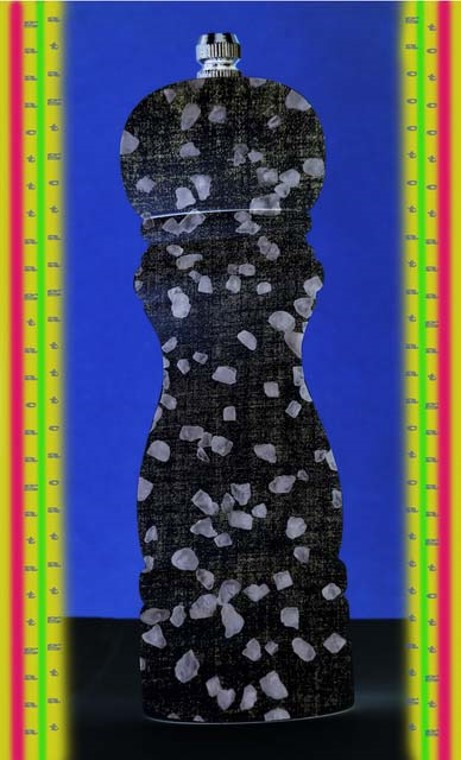
Kevin Clarke - 1 Kevin Clarke Portrait des Johannes Brus A.Ch. Print/Dibond 150 x 93 cm
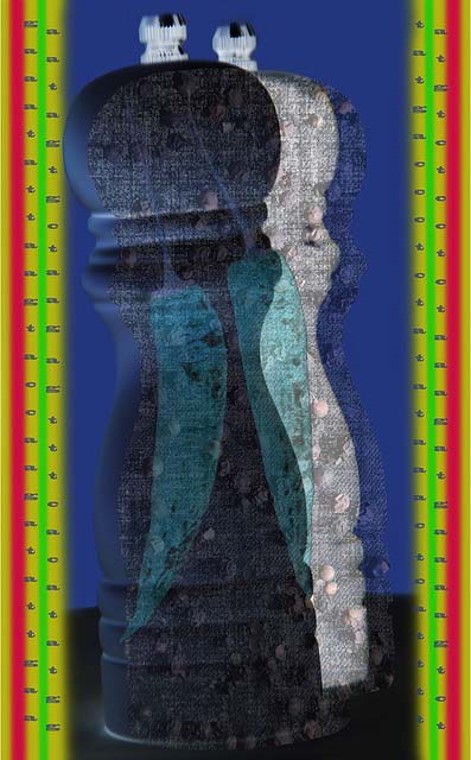
Kevin Clarke - 2 Kevin Clarke Portrait der Monika Brus A.Ch. Print/Dibond 150 x 93 cm
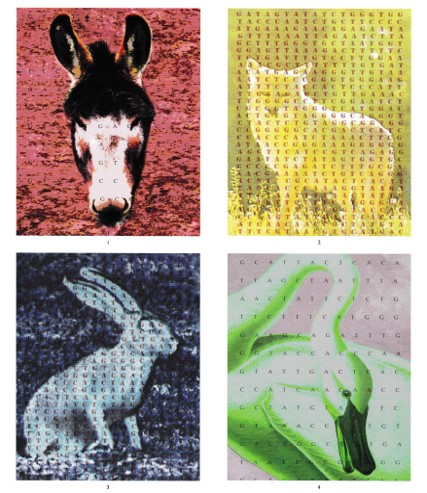
Kevin Clarke - 3 Kevin Clarke Portrait des Joseph Beuys 2011m
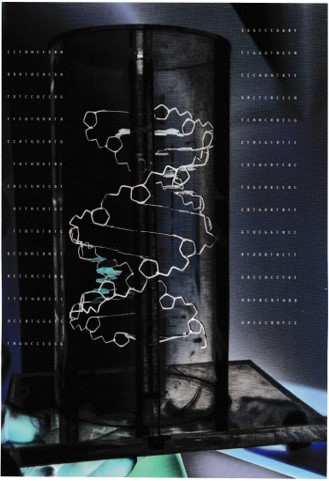
Kevin Clarke - 4 Kevin Clarke Portrait des James Watson 2018
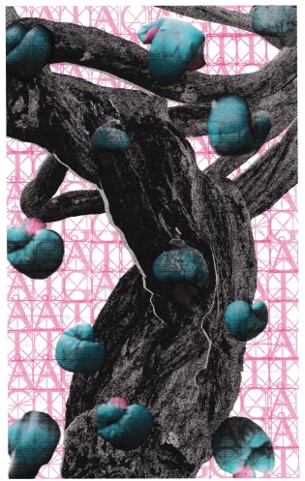
Kevin Clarke - 5 Kevin Clarke Portrait des Manfred Möller 2016